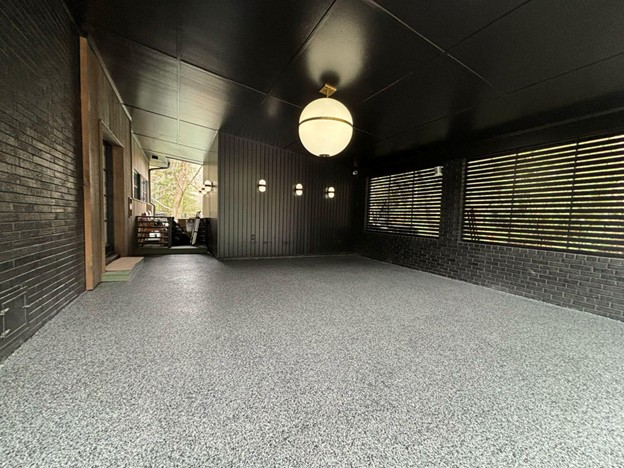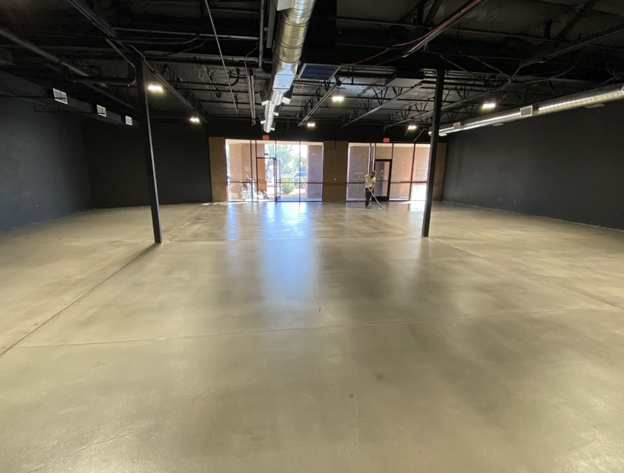
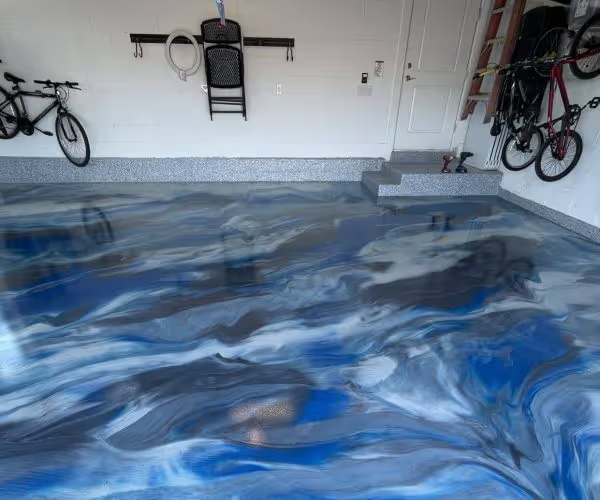
Epoxy flooring is often chosen for areas that require static resistance and resistance to daily wear and tear and dust accumulation in all home and soft commercial settings. In many cases, garage floor coatings are used to protect concrete from oil contamination, tire marks, and moisture settling, which smooths out the texture of the surface. big role in the long run. Clean preparation helps the material bond better with concrete underneath without early peeling issues.
Preparation Steps and Material Handling Basics
Proper specification of an epoxy floor usually begins with checking the moisture level and floor cracks before any coating is applied. Contractors working on garage floor coatings often grind the concrete to create a hard profile that improves the adhesion of the entire coating. Removal of dust is essential because remaining particles can later weaken the bond strength within the curing material. Material mixing must stay consistent to avoid uneven patches across large floor areas in commercial setups.
Application Methods and Layering Practice
During installation of an epoxy floor, applicators spread the base layer carefully to ensure even coverage across all sections. In many projects, garage floor coatings require multiple coats that are applied after specific waiting periods between each stage. Temperature changes affect how quickly each layer sets and bonds to the surface below. Roller clamps are commonly used gear based on soil size and processing requirements. Proper timing during application helps reduce visible imperfections after curing completes fully.
Durability Factors and Long-Term Care
An epoxy floor can handle heavy use when properly installed and maintained in busy environments. Many garage floor coatings work well at resisting chemicals; however, daily cleaning is nonetheless important for floor condition. If sharp particles are not quickly removed from the surface, additional small scratches may appear over time. Protective top coats are often introduced to increase service life and improve wear pattern resistance. Humidity and temperature shifts can slowly influence surface hardness in large floor spaces.
Cost Considerations and Project Planning
Budget planning for an epoxy floor depends on surface condition, labour, and material selection choices. Garage floor coatings often require different pricing based on coating thickness and preparation effort needed. Large commercial areas usually increase overall project time due to surface complexity and layout design. Planning also includes drying time, which affects when the space becomes usable again after work. Accurate estimation helps avoid delays during installation phases in structured projects.
Conclusion
Both epoxy floor systems and garage floor coatings continue to be widely used across residential and commercial environments today for surface protection. More details about surface solutions and coating systems can be explored at rhynopoxycoatings.com for technical guidance and project planning support materials. Performance depends heavily on preparation quality, material consistency, and correct application timing in real working conditions and usage environments overall. Contact experienced professionals when planning new flooring projects for reliable assessment and structured execution support in commercial setups.